

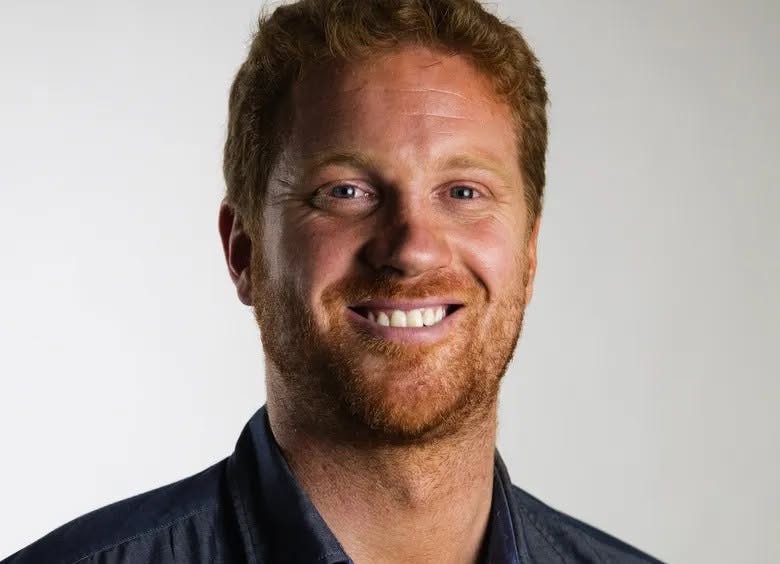
Last week’s Matt Calkins vs. The Seattle Times debate teemed with such utter lack of nuance that the innocent and vulnerable, true points of contention – transitioned or transitioning teens – were the ones who took the most harmful jabs.
Thanks to Calkins and his defenders, the term “biological male” is seared into public consciousness as a factual designation of transgender athletes competing in (mostly, high-school) girls’ sports. In Washington state, transgender girls are not banned from competing in girls’ sports. But that’s not the crux of the case Calkins quit his job over trying to make.
One of the subjects of Calkins’ spiked column, Ahnaleigh Wilson, 16, claims she finished second to a transgender athlete at a Junior Olympics track meet two years ago. Girls are not required to provide proof affirming their biological sex before being allowed to compete in gender-separated sports. Neither Wilson, nor her parents, and not even the Title IX complaint filed by the Washington Parents Network explain how the winner of this particular race was proven to be a “biological boy.” The only proof offered were photos showing the first-place finisher to be bigger than the other participants.
And a plain, unsupported declaration — the same “fact” that Calkins used.
I started my journalism career as a copy editor in The Seattle Times sports department. If I had edited Calkins’ column, the third or fourth question I would have asked is how he knew the runner who beat Wilson was transgender and a “biological boy.” If Calkins couldn’t or wouldn’t answer, I’d have referred his column to editors higher up in the department.
My actions would have been informed by my education in journalism at Seattle University, my graduate education at Columbia University, and my training and experience at the Times. It would not have been the product of some liberal agenda supposedly pushed upon employees at media outlets like the Times. I’ve never been asked to change the slant of any story I’ve written, nor have I attended or been forced to attend any meeting laying out the rules of maintaining the left lean of the Times or any other outlet for which I’ve written.
Moreover, I thought everyone knew that The Seattle Times is editorially conservative (or, at least, centrist), sometimes to the chagrin of members of its staff who are independently leftist in their political thinking – against which they (are supposed to) shield their reporting.
In this case, the Times’ caution betrayed itself and its readers. The 130-year-old daily newspaper has yet to comment on Calkins’ departure. As such, it has allowed Calkins to set the narrative, namely that the newspaper censored its former columnist – and not for the first time – in what is strongly implied as a campaign to prevent challenging “prevailing newsroom narratives and … (triggering) the outrage mob.”
The latter was not my experience at the Times. In 1996, I wrote a column in support of NBA player Mahmud Abdul-Rauf, who stopped standing for pre-game renditions of the national anthem. He did so to protest the way this country – his country and mine – discriminated and oppressed people like him, Black and Muslim. And like me, a Japanese American whose community was forcibly removed and incarcerated during World War II.
I joined Abdul-Rauf in what I thought was a silent and respectful protest. The resulting rancor (back in a time when you had to write out, stamp, and mail your outrage) filled a large cardboard box and included death threats such as an offer to send me back to Japan in a pine box.
The Times also received so many phone threats against me, it asked the Seattle police officers acting as security to monitor me more closely during subsequent Sonic games.
It’s instructive that Calkins’ editors, as he claims, never gave him feedback during a protracted period, then killed his column with only an explanation that Calkins failed to declare the subject of his column in advance.
As I insinuated earlier, there are numerous holes in Calkins’ now-unspiked column (it’s appeared in the New York Post, among other places). Though it’s becoming less so, journalism is a collaborative effort. If editors had problems with the column, they would have offered Calkins a chance to revise, and they’d go back and forth – until the holes were filled or the author became intransigent.
If his editors behaved as Calkins claimed, then the Times deserves all the thorns being flung its way, especially along the parade their former columnist has paved through the right wing of this country.
The problems with Calkins’ column begin with its lead. I say that after great deliberation because, as a writer myself, I try my hardest as an editor to preserve the writer’s voice. Calkins opens, “Some people saw bigotry. I saw bravery,” about a pair of teenagers making dubious claims that he failed to check.
Then, in introducing the “biological male” trope, Calkins writes, “men have higher testosterone levels and different skeletal and muscular frames, which together produce significant performance advantages.” True, but he attributes these to transitioning males going through a process Calkins clearly does not understand. If he’d tried, he’d have learned that studies in an emerging field show that hormone therapy for males results in greater fat mass, less lean mass, and a reduction in strength.
This, and more, leads to the Matt Calkins Theorem, that two things can be true at once. I fact-checked this, and he’s right: I am at once confused and outraged at how Calkins twisted this truism to obscure his prejudices.
The reason I’ve dropped this piece onto a Substack dedicated to Rainier Beach High School boys basketball is because I cover that championship team as an example of Black excellence and source of South Seattle pride. I usually write opinion pieces about race and other marginalized communities, so there is connective tissue to RBHS hoops and transphobia.
I point this out because the two-things-can-be-true-at-once theorem has been applied throughout the history of humankind, including in the justification of this country’s original sin. “Black people are inferior” begat “separate but equal” begat “redlining and ghettoization” and so on. You can’t say you want to exclude a certain type of people, but that desire doesn’t mean you’re racist, misogynistic, homophobic, Islamophobic, transphobic, or whatever other phobia you possess.
It doesn’t work that way. It never has.
Not only that, but scholars argue that female athletes of color have historically faced outsized scrutiny and false accusations over gender. To wit, Algerian boxer Imane Khelif and Taiwanese boxer Lin Yu-Ting faced hostility and false accusations during the 2024 Olympics. In 2009, South African runner Caster Semenya was sidelined for 11 months because of track and field regulations around hormone levels. It turned out that Semenya had a condition that caused naturally high testosterone.
I’m not the only one who believes that Calkins’ unspiked column and Substack justification are part of a larger and longer pattern in his work. Reposting the canceled columnist’s tweet, women’s basketball writer Roberta F. Rodrigues wrote, “Good news, Storm media. You won’t have to share the media row with someone who upholds sexist, transphobe and racist narratives anymore.” By Calkins’ own admission, other columns killed by the Times included one questioning whether U.S. Women’s Soccer Team players really were victims of discrimination in their equal-pay lawsuit. Another tried to use a Black basketball coach, Mike Bethea of Rainier Beach, to urge the public not to stereotype cops shortly after the murder by police of George Floyd.
One of my original reactions to Calkins’ resignation was disappointment in the Times, because of its championing of the First Amendment and giving voice to the voiceless. There cannot be degrees of free speech, after all. But the Times did not censor Calkins; we all can now read his work. He was an employee offered unguaranteed access to the Times platform. From my experience, that access hinges on high standards of writing, reporting, ethics, and at least a genuine effort to be unbiased.
From what I (forced myself to) read of Calkins over 11 years, he often failed those standards. That’s bad on the Times. It hired him and allowed him to keep the column.
When the inimitable Larry Stone (admission: I once tried to hire him away to be an executive at Rivals.com when it was still in startup mode) retired in 2023, I suggested the Times think out of the box. My idea was to split the column and hire three diverse voices, which not only would have provided more voices to the voiceless, it actually would have saved the newspaper some money. Instead, it hired Mike Vorel, yet another white man, to pair with Calkins and fortify an industry already dominated by white men.
The demographics of the U.S. newsroom creates a White Male Gaze with which all of us are familiar because it’s the default in this country. The white maleness of mainstream news media, especially in sports, one of the only diverse segments of U.S. society, foments mistrust and lack of support by marginalized communities. Change will not come willingly, on any side, so it must be nurtured by exposure to difference.
Leaning into white male voices also is the Times’ bad, one it now has an opportunity to fix.
Two things can be true at once, after all. Matt Calkins was rarely a pleasure to read, and The Seattle Times overlooked that fact to the point of becoming less relevant to so many of us.
Glenn Nelson is a Japanese American journalist and lifetime South Seattle resident who founded The Trail Posse and has won numerous national and regional awards, including for the South Seattle Emerald, for his writings about race.
Glenn, I'm commenting here as a lifelong hardcore leftist, supporter of gay and lesbian rights, fan of women's sports, decades-long season ticket holder for UW Women's Hoops all the way from the Chris Gobrecht days of ferocious defense and atrocious offense, to the the glory years, including a Final Four.
I find it difficult to believe, at this late date, that you are still denying that Imane Khelif and Caster Semenya are males, with male-specific DSD's. Khelif was tested at two different boxing tournaments, by two different certified labs. Those tests came back showing male chromosomes. The Olympic Committee was notified of this well in advance, and did nothing. The recent IOC policy change (requiring genetic testing, by means of a simple cheek swab) means this will not happen again. https://strongerwomen.substack.com/p/on-xy-high-testosterone-boxers-and
You spent a good part of your career building a site devoted to girl's hoops. You clearly are a supporter of girl's and women's sports. But you are dodging the question of how to maintain and protect what must be a FEMALE category in sports. You must be aware that the IOC, World Athletics, and Women's Tennis have all now adopted policies requiring genetic testing for all competitors in the female category. All the smoke around the WNBA (and in girls sports here in WA) would vanish in an instant if the leagues would adopt the same policy. There would be no questions or rumors about any players. There'd also be no men punching women in the head on the way to stealing gold medals in the Olympics, or boys like AB Hernandez in California sweeping all the jumping events in the State track and field championships. All the girls championships, that is. We have a similar situation in WA. The NCAA needs to clarify its policies too, so we don't have another Lia Thomas travesty. He was a mediocrity in several years competing in the male category, yet somehow won championships just by declaring himself a woman. Same biology, same body, just tweaked his "identity." The result was to deny advancement and medals to women who'd devoted their lives training and competing. Did you think this was fair to the women? Or did you only care about the feelings of this man?
The Supreme Court recently ruled, on a 9-0 vote, that Title IX language prohibiting discrimination "on the basis of sex," means SEX. That's a biological term, with a clear scientific meaning. It's not an identity, a belief, or a costume. Rag on Matt Calkins all you want for using "biological boy," but the only reason he was wrong to use the term is that it's redundant. A boy, in the context of his column (discussing the matter of boys competing in the girls category here in Washington interscholastic sports), is an adolescent human MALE. I won't get down on him for being redundant, however, because your column here shows the massive confusion sown by gender identity ideology, amplified by the AP and Seattle Times style guides that refuse to clarify to readers that the issue is of males in female sport.
It's not a matter of trans athletes, either. Quinn, who played soccer for the Seattle Reign and the Canadian National WOMEN'S Team, declares a trans identity. No issue whatsoever: Quinn is female, competing in the female category. Same with Nikki Hiltz, the 800-meter runner who represented the US in the most recent Olympics. Nikki can't wait for her career to be over, at which point Nikki plans to start on testosterone and have a double mastectomy (of perfectly healthy breasts), but in the meantime, Nikki races in the female category. No problem. Layshia Clarendon played in the WNBA for 11 years, before surgeries and testosterone as part of a desire to present as a man. So long as Layshia wasn't using testosterone during playing years - which would be a doping violation - no problem. Layshia is female, competing in the female category.
The Seattle Times (and the No Hate in WA State campaign) always portray this as banning "transgender athletes from participating." No. It's a ban on MALE athletes competing against FEMALE athletes in the category that was/is for FEMALES. It is up to other boys and men, school administrators, and sports leagues, to make space for boys and men identifying as something other than boys and men - in the MALE category. Girls and women are not defective men. We should not be encouraging boys, especially, to diminish their physical abilities by taking wrong-sex hormones, or undergoing surgeries, to somehow "qualify" into the female category. These do not eliminate male physical advantage, but they do interfere with physical and cognitive development, irreversibly.
Either you support girls and women having fair competition, privacy from males in the locker rooms and in travel arrangements, or you don't. Bodies compete in sports, not identities or religious beliefs. Matt Calkins at least was willing to touch this "third rail" of political discourse. The Seattle Times beclowned itself not just by spiking his column, but by then publishing Naomi Ishisaka's column only a few days later on inequities in women's sports, a column that totally ignored the elephant in the room! There is no greater inequity in women's sports than allowing males to compete in the category. 27 States already define girls' sports as female only. It's long past time for Washington to join them.
I'll leave the last word to tennis great and lesbian icon Martina Navratilova, writing a guest column on the Stronger Women Substack (written by a former Stanford and pro women's basketball player.)
https://strongerwomen.substack.com/p/guest-column-by-martina-navratilova
Thanks for this, Glenn. Very thoughtful!